
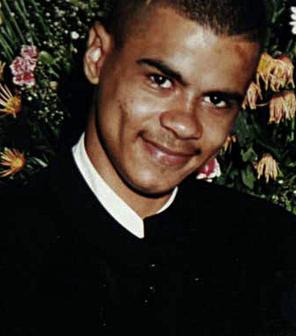
The Death of Mark Duggan (2011)
Mark Duggan was a 29-year-old man who was shot dead by a Metropolitan Police firearms officer in Tottenham, North London, on 4 August 2011. A father and member of a large local family, Mark’s killing became one of the defining cases in the history of policing and racial justice in Britain. The circumstances of his killing, the police handling of the aftermath, and the eventual inquest became central to wider questions about lethal force, racial inequality and public trust in policing.
Mark was travelling in a minicab through Tottenham when he was stopped by armed officers as part of a pre-planned operation by the Metropolitan Police’s Trident unit. The officers had intelligence suggesting that Mark had obtained a firearm. The minicab was forced to stop on Ferry Lane, where firearms officer V53 shot Mark twice. One bullet struck him in the chest and proved fatal. A handgun was subsequently recovered from grass close to the scene, several metres from where Mark had fallen.
From the beginning, there were serious disputes over what had happened. Initial police briefings suggested that Mark had fired at officers before being shot, but the Independent Police Complaints Commission (IPCC) later confirmed that there was no evidence that he had fired the gun. Ballistic testing found no evidence that the recovered firearm had been discharged at the scene. The IPCC also acknowledged that it may have misled journalists in the immediate aftermath by allowing the impression that there had been an exchange of gunfire. For Mark’s family, the conflicting accounts compounded their grief and deepened their distrust of the investigation.
Two days after Mark’s death, around 120–300 family members, friends and supporters marched from Broadwater Farm to Tottenham police station. They were seeking answers and justice for Mark, and remained outside the station waiting to speak to a senior police representative. Later that evening, the situation progressed and violence broke out. The disorder spread rapidly through Tottenham and then across London and other English cities over the following days. Mark’s family publicly condemned the violence and rejected the idea that it represented their campaign for justice. Nevertheless, his killing remained inseparable from the national debate that followed about police-community relations, inequality and the treatment of Black communities by the state.
The investigation into Mark’s death continued for years. The inquest, held publicly at the Royal Courts of Justice between September 2013 and January 2014, heard from dozens of witnesses and considered extensive forensic, ballistic, medical and CCTV evidence. Jurors concluded, by eight votes to two, that his killing was lawful, but also that there were failures in the gathering and handling of intelligence before the shooting. Although these findings did not result in a verdict of unlawful killing, they exposed important weaknesses in the chain of decisions that culminated in Mark being shot. The case subsequently became a lasting reference point for campaigns against police violence, particularly among Black communities who saw in Mark’s death both the dangers of armed policing and the difficulty of obtaining an account of police actions that families could trust.
Mark Duggan’s legacy extends far beyond the events of August 2011. His name became associated with a fundamental demand: that when the state takes a life, the circumstances must be subjected to independent, transparent and meaningful scrutiny. His family’s determination to establish what happened helped expose failures in police communication and intelligence, while the protests that followed his death placed questions of racialised policing and public accountability at the centre of national debate. Mark remains remembered not simply as the man whose death preceded the 2011 riots, but as a father, son, brother and friend whose killing became a catalyst for a much broader struggle over justice, police power and the value placed on Black lives.