
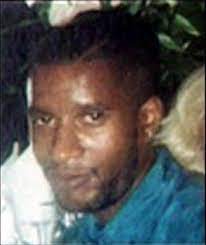
The Death of Brian Douglas
Brian Douglas was a 33-year-old music and sports promoter from Balham, South London, who died on 8 May 1995 following an encounter with Metropolitan Police officers. His death became one of the earliest and most influential cases in the campaign against deaths following police contact and helped shape the work of the United Families & Friends Campaign (UFFC).
On 3 May 1995, Brian was stopped by two Metropolitan Police officers in Clapham. During the stop, one of the officers struck him with a recently introduced long-handled police baton. The officers later claimed the blow was delivered in self-defence and intended for Brian’s upper body, but instead struck his head.
Following his arrest, Brian was taken to Kennington Police Station, where he remained in custody for between 15 and 17 hours. During this time, despite displaying signs of serious injury, medical professionals failed to recognise the severity of his condition. He was eventually transferred to St Thomas’ Hospital, where he died five days after the incident from a fractured skull and a massive brain haemorrhage.
At the 1996 inquest, forensic pathologists concluded that the fatal blow had been delivered directly to the top and back of Brian’s head with considerable force. Independent witnesses also challenged the police account, stating that Brian appeared unarmed and posed little threat at the time he was struck. Despite this evidence, the jury returned a verdict of misadventure, and no police officers faced criminal charges or disciplinary action.
Brian’s family, led by his sister Brenda Weinberg, refused to accept the outcome and embarked on a long campaign for justice. They pursued legal challenges, including a judicial review of the coroner’s handling of the inquest, while organisations such as Amnesty International raised concerns about both the use of the police baton and the medical treatment Brian received while in custody.
Supported by the United Families & Friends Campaign, the Douglas family became one of the movement’s founding voices. Brian’s case featured prominently in the award-winning documentary Injustice, which examined deaths in police custody across the UK and brought national attention to the experiences of bereaved families seeking accountability.
In 2013, it emerged that undercover Metropolitan Police officers had infiltrated the Douglas family’s justice campaign as part of the Special Demonstration Squad, adding a further layer of controversy to an already deeply troubling case.
Brian Douglas’s legacy remains central to the work of the United Families & Friends Campaign. His family’s determination continues to inspire the ongoing fight for justice, transparency and accountability following deaths in police, prison and psychiatric custody.