
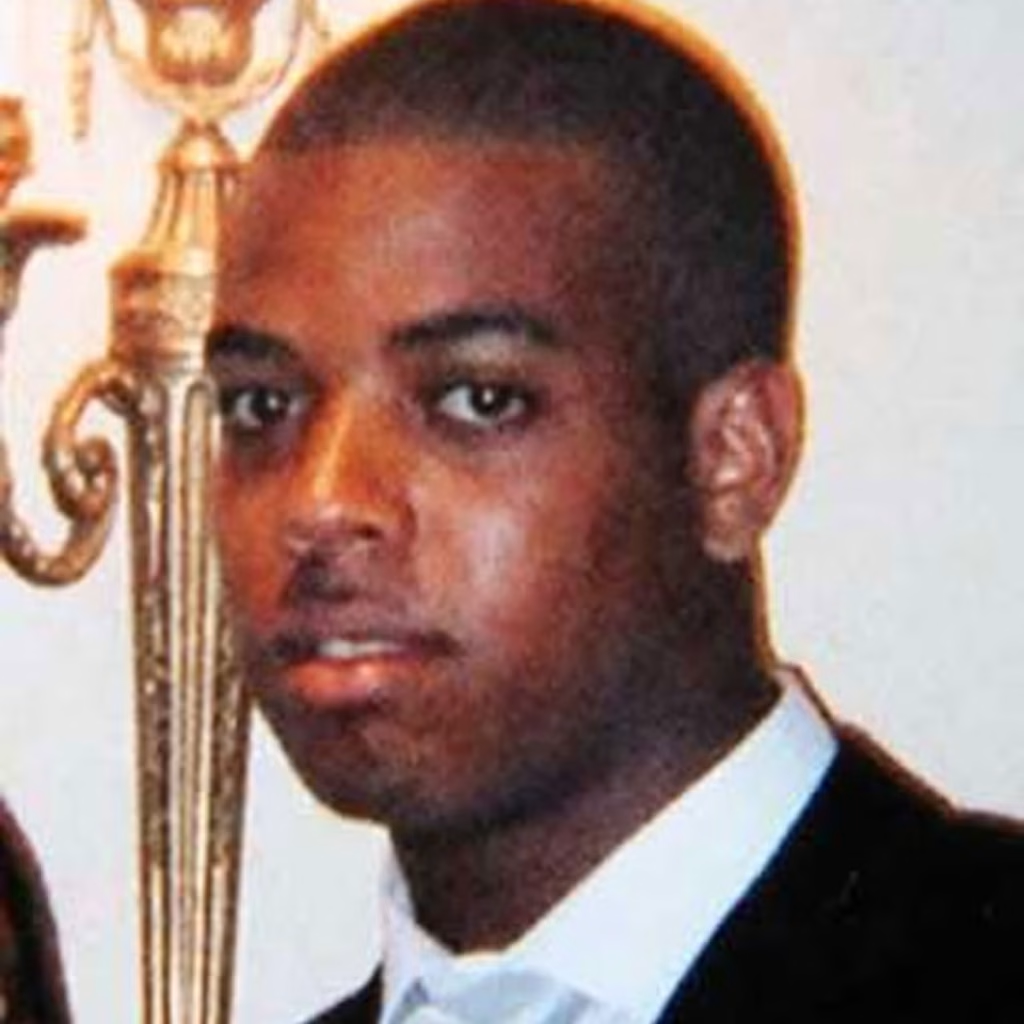
The Death of Azelle Rodney
Azelle Rodney was a 24-year-old Black man who was shot dead by a Metropolitan Police specialist firearms officer during a tactical “hard stop” on a vehicle in Edgware, North London, on 30 April 2005. His sudden and violent killing sparked a decade-long legal battle led by his mother, Susan Alexander. The case remains a landmark in modern British legal history, exposing the catastrophic use of lethal police force, the systemic suppression of operational intelligence, and the extreme obstacles bereaved families face when demanding state transparency.
The incident occurred in the evening when armed police intercepted a silver Volkswagen Golf. Officers suspected that Azelle and the two other occupants were en route to execute an armed robbery against a rival drug gang. Within less than a second of the police vehicles blocking the car, a specialist firearms officer, known for years only as “E7” (later identified as Anthony Long), opened fire with a carbine rifle. E7 fired eight shots in rapid succession at point-blank range, striking Azelle six times in the head and upper body. Azelle, who was completely unarmed at the moment he was shot, died instantly at the scene.
The immediate aftermath was defined by a profound lack of accountability and years of institutional delay. A standard coroner’s inquest could not be held for years because the Metropolitan Police aggressively refused to disclose secret surveillance and communication data—believed to involve phone intercepts—to a public courtroom. This resistance triggered a fierce national debate regarding “secret inquests” and state overreach. Susan Alexander fought relentlessly through these delays, continuously rejecting police attempts to demonize her son in the media while hiding the operational facts behind a wall of official secrecy.
Following the abandonment of secret inquest legislation, a statutory Public Inquiry was finally convened in 2012 to bypass the legal deadlock. Chaired by retired judge Sir Christopher Holland, the 2013 Azelle Rodney Inquiry report delivered a damning verdict. It concluded that the shooting was completely unjustified, finding that E7 had no reasonable grounds to believe Azelle was a threat and that the lethal operation violated the right to life. The inquiry explicitly ruled that the officer’s actions amounted to an unlawful killing, dismantling the Met’s official containment narrative.
The findings forced the Crown Prosecution Service to re-evaluate the case, leading to E7—Anthony Long—being criminally charged with murder. However, when the criminal trial took place at the Old Bailey in 2015, the jury ultimately acquitted Long of the charge. While the acquittal devastated the family, Susan Alexander framed the historic prosecution itself as a monumental victory, noting that forcing a firearms officer to stand trial in a criminal court for an on-duty killing was a rare breach of institutional immunity.
Susan Alexander has turned her personal tragedy into an enduring platform for systemic reform. Her decades of advocacy emphasize the severe emotional toll exacted on families by state legal maneuvers. Azelle’s legacy stands as a vital reminder of the continuous community struggle against arbitrary police violence, the right to a public trial, and the unyielding dignity of a mother fighting for the truth.